Brett Park's Revolutionary Art Practice
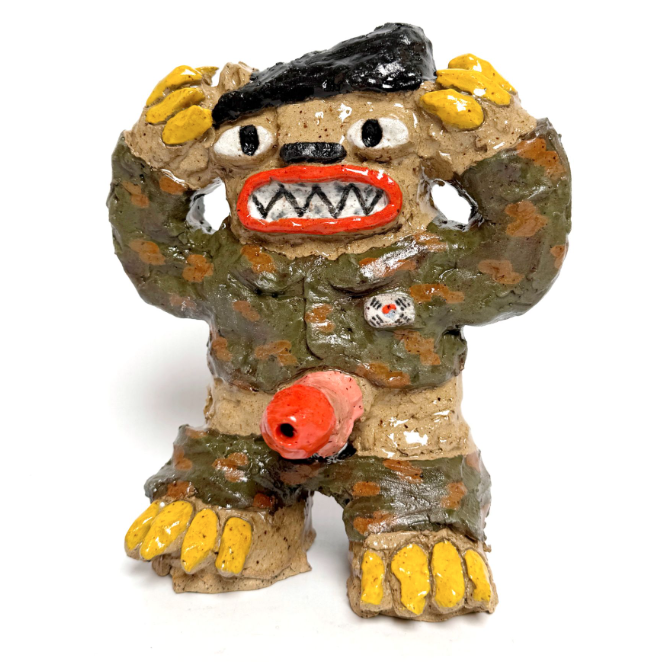
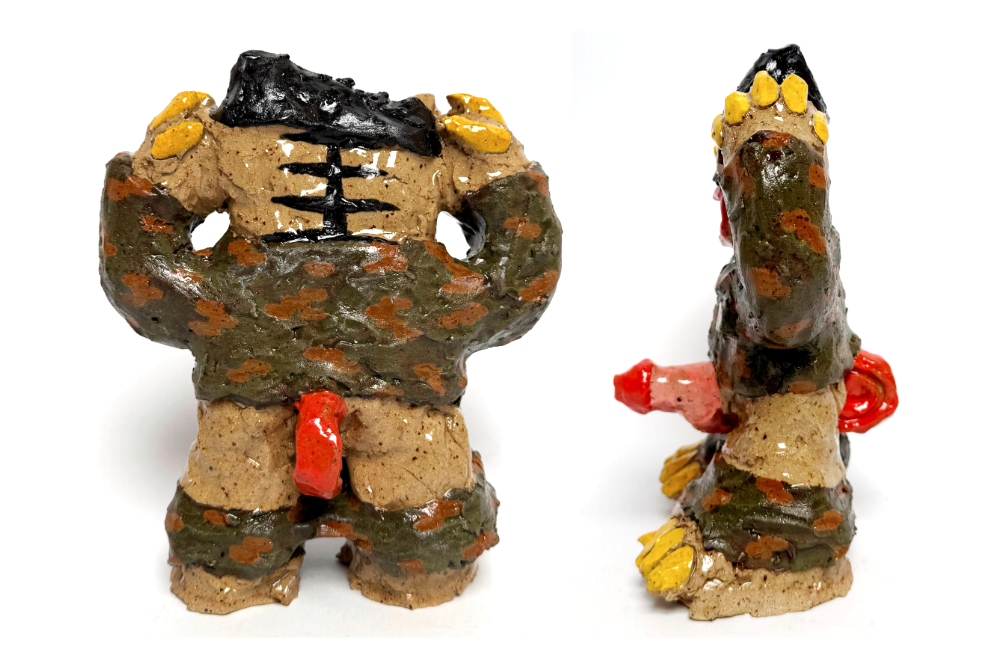
An artist's journey from webcomics to material resistance
When I first met Brett Park at USC, he was making cartoons: playful, pointed observations of everyday life rendered in webcomics. Now, from his New York apartment via video call, I'm looking at charcoal drawings of figures trapped in quatrefoil grids, their bodies contorted as they attempt to liberate themselves from the very structures that contain them. The evolution is stark, but as Brett explains, the thread has always been there: a deep engagement with how power operates, how bodies are read, and what liberation might actually require.
"Right now, drawing and making art is totally ancillary and subordinated to what I do in my everyday life," Brett tells me early in our conversation. It's a startling admission from someone who just completed a BFA. For Brett, the traditional artist's path (gallery shows, institutional validation, market success) has become something to actively resist, even as he acknowledges his own desire for these markers of achievement.
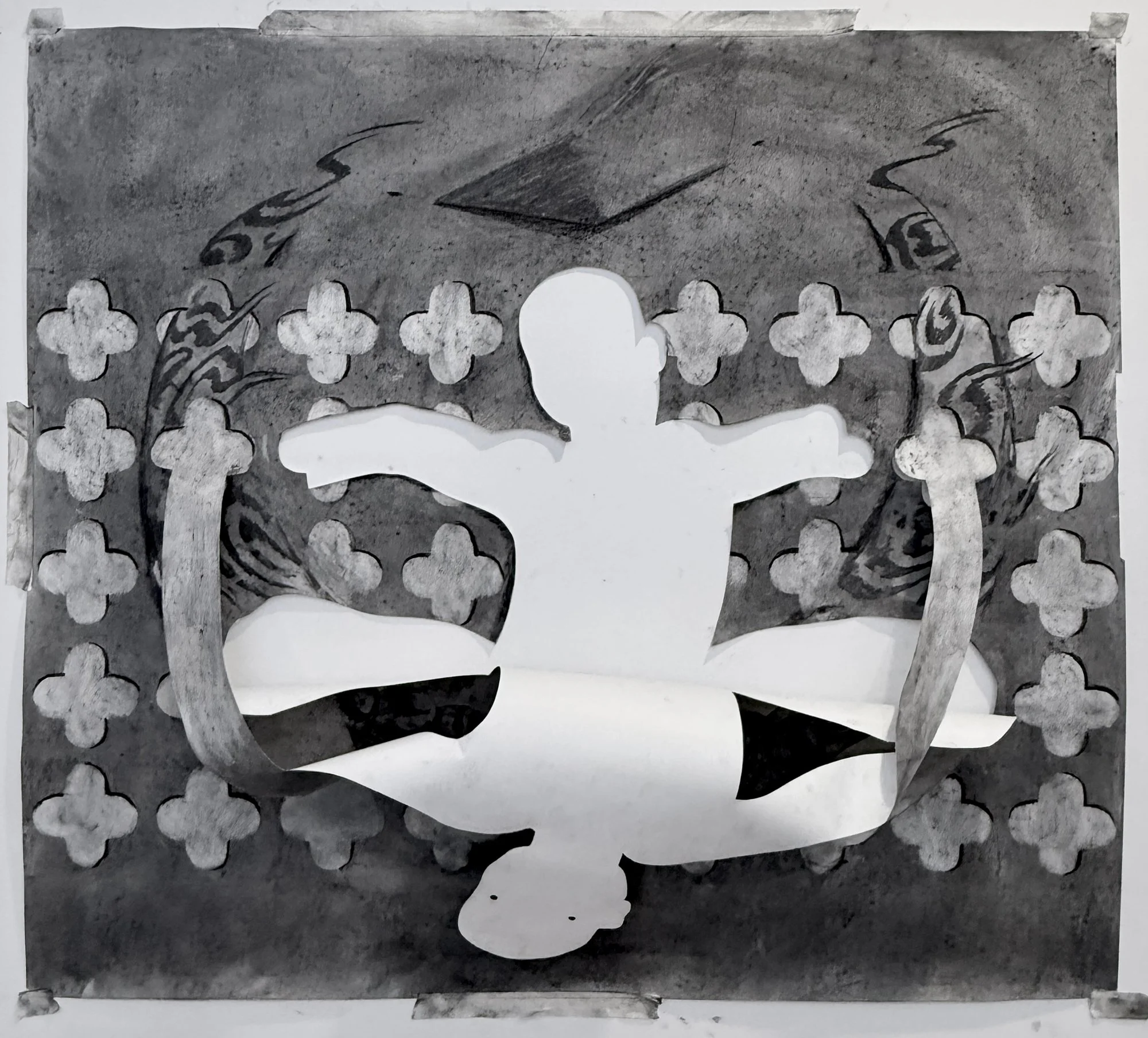
Brett Park, Un/tetherable, 2025, Charcoal on paper, 40.5” x 36”
The Contradiction
Brett speaks candidly about being "pulled between petty bourgeois tendencies and revolutionary solidarity," a contradiction he doesn't attempt to resolve so much as hold in full view. "I would still love to be part of it. Hello. Like, I'm still going to apply to the grants," he admits with characteristic frankness. "But if I'm making my money at my little ceramics job and I don't have to sell a piece here and there, then I think that's kind of cool."
This isn't cynicism; it's pragmatism. Financial independence from galleries creates freedom to make politically uncompromising work. Brett describes the subtle ways artists self-censor: softening language around Palestinian genocide to "war," removing colors a gallerist dislikes, tweaking grant applications. These small concessions reveal how thoroughly the art world disciplines artists into compliance.
What makes Brett's position compelling is that he doesn't position himself above these compromises. "From what I've seen, a lot of artists have tried to adopt this identity of, oh, I'm an artist, so the only way I can push a politic is through my work," he explains. "But that's very limiting."
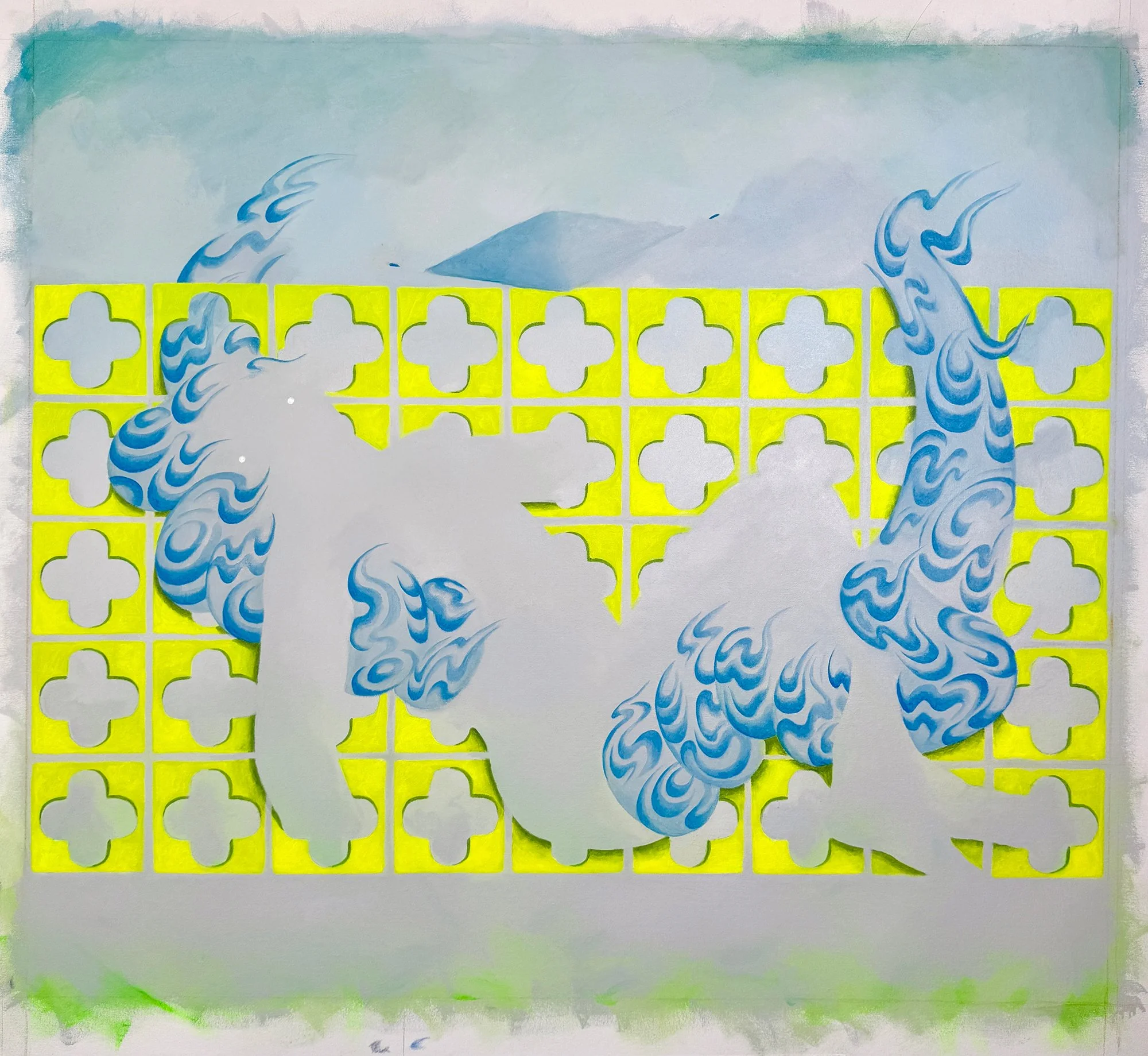
Brett Park, Tender Tendencies, 2025, Acrylic on canvas, 40.5” x 36”
The Real Work
For Brett, meaningful political work means going to housing projects with his organizing group, door-knocking, listening to residents' needs, and building relationships without imposing top-down solutions. This isn't about dismissing institutional change. Brett is quick to note he's "just getting into more materialistic, revolutionary thought since the student encampments for Palestine." Rather, it's about modeling an alternative: the artist who makes ceramics to pay rent, organizes in their spare time, and creates art as "detritus" from lived political engagement rather than as the primary vehicle for change.
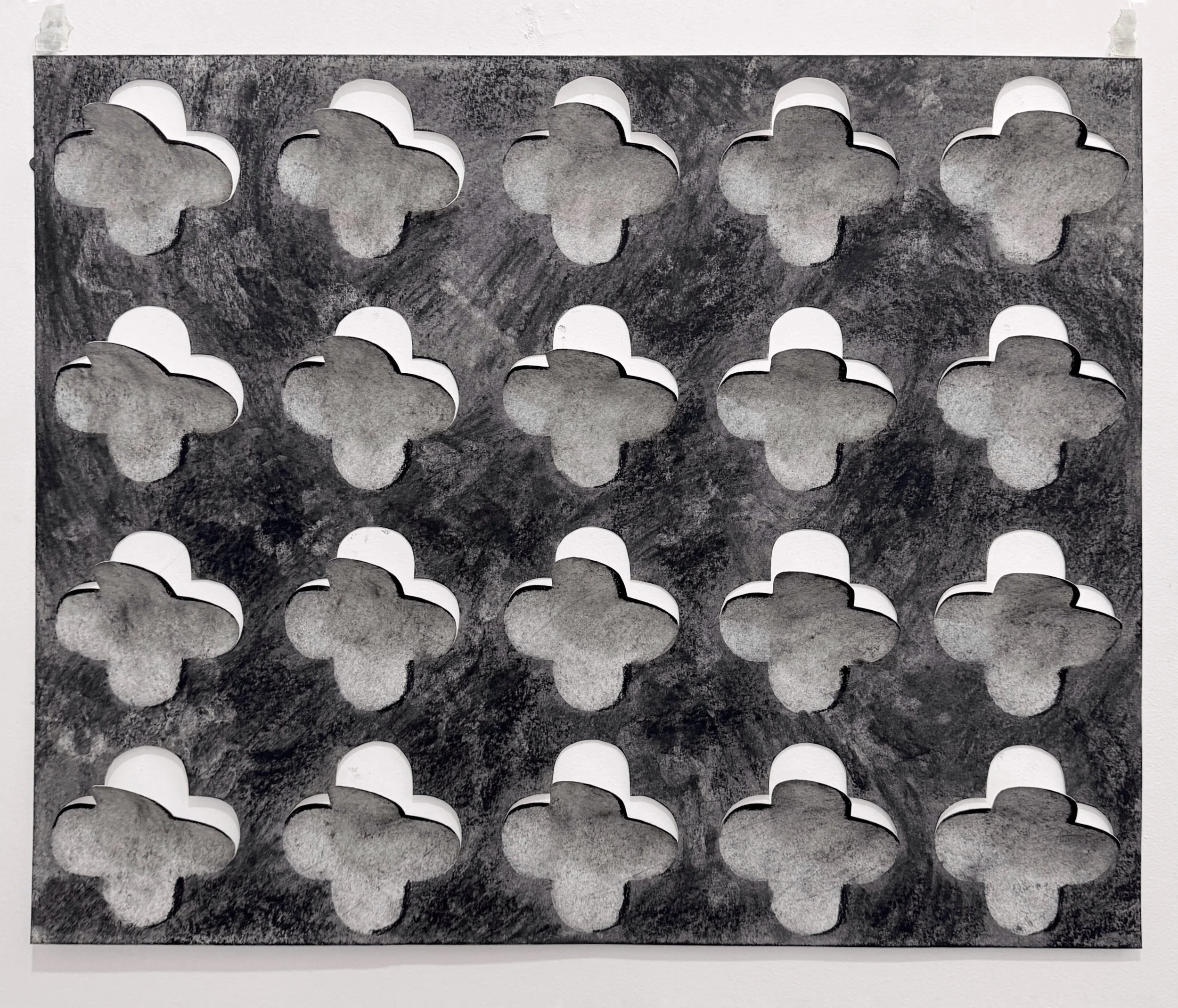
Brett Park, Flaccid (W)holes, 2025, Charcoal on paper, 22.5” x 18”
The Politics of Holes
When we turn to discuss Brett's recent work, the conversation shifts to William Pope.L's theory of holes as portals: spaces that simultaneously represent "nothingness and everythingness." For Brett, a queer Korean American artist, this opens up multiple readings: holes as orifices, as portals in Asian architecture, as sites of fetishization under white imperialist gaze, and ultimately, as sources of unexpected power.
"How do we draw power from holes themselves?" Brett asks. His repeated use of quatrefoil forms (four-lobed shapes found in religious iconography and in breeze blocks) creates visual puzzles about presence and absence. When Brett physically cuts out sections of paper, the "hole" shifts: is it the quatrefoil shape, or the void it creates?
Brett describes figures "trying to cut themselves out of the material block they're in," trapped in their own attempts at individual liberation. "They're only offered a certain amount of agency, being cut out of the picture frame, and they're still materially tied to the very thing that is oppressing them." What's needed, the work suggests, isn't individual escape but collective revolution.
Brett's Paper Tiger series makes this revolutionary stance explicit. Taking Mao's description of American imperialism as a "paper tiger,” threatening in appearance but vulnerable to collective action, Brett creates images of figures emerging from holes to behead tigers rendered on the picture plane. Even more pointed is his response to Picasso's Massacre in Korea. While acknowledging it as one of the few Western paintings addressing American violence in Korea, Brett argues it's "borderline offensive" in its infantilization of Korean people and reduction of women to passive victims. In his own charcoal drawings, Brett flips the composition, showing Korean figures actively fighting back.
This commitment to showing revolutionary agency raises questions Brett himself is working through: "I think it is kind of sometimes dangerous when I have so much ambiguity because someone can totally take this in a different direction than what I intended." He references how institutions can co-opt ambiguous work. Yet he also values ambiguity as "relating to queerness," something that "can't be fixed, it's always dynamic."
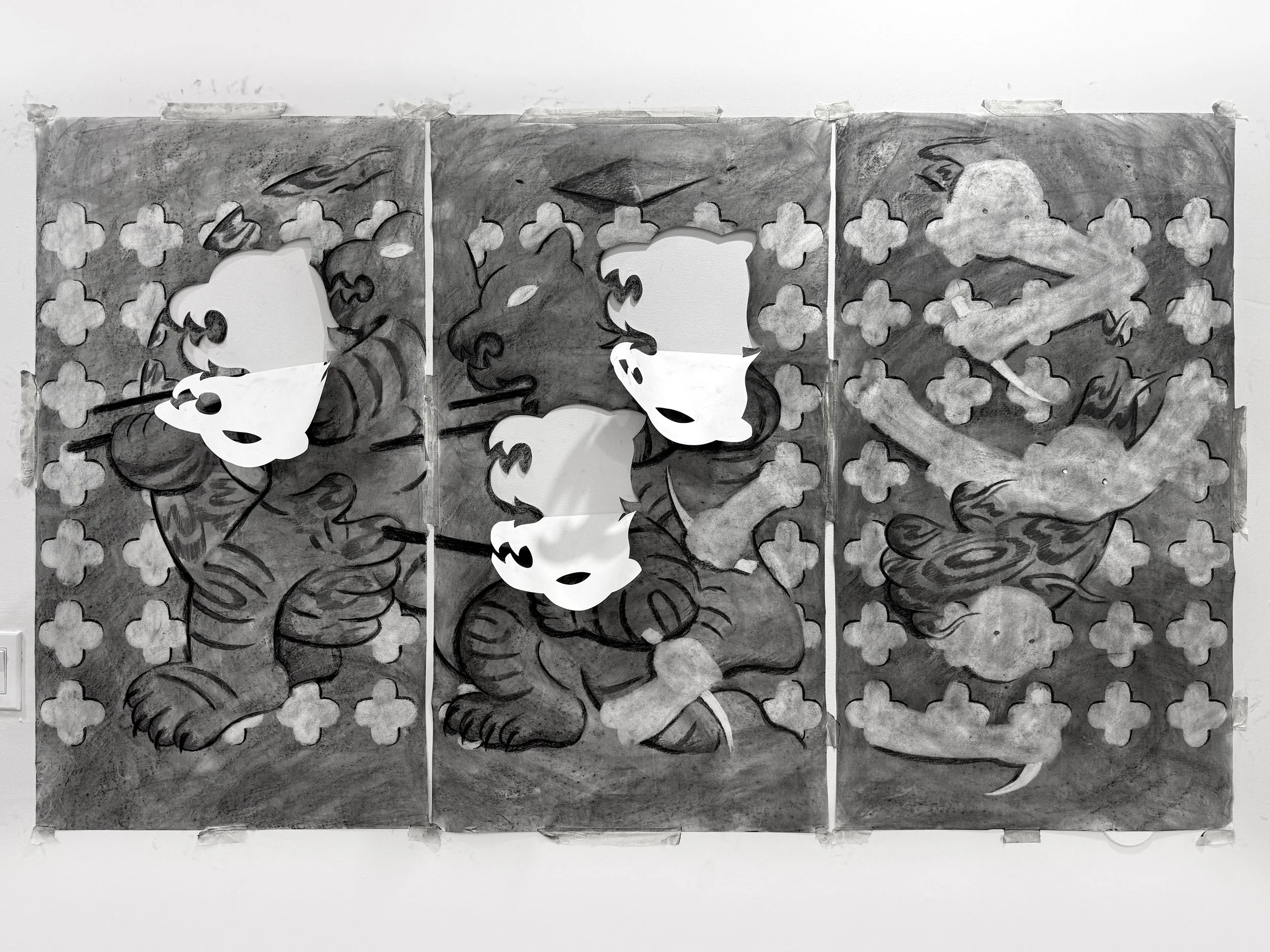
Brett Park, Paper Tiger No.2, 2025, Charcoal on paper, 40.5” x 81”
Material Choices
Brett's use of charcoal proves particularly rich. Initially, he describes the choice pragmatically: charcoal allows gestural energy that paint and pastel can't match. But when I observe that charcoal is itself a form of detritus, wood transformed through burning, Brett lights up: "It's literally detritus. You're making something new out of it."
The "black parts" in Brett's drawings are simultaneously present (as charcoal marks) and absent (as cut-out voids revealing the wall behind). When viewed digitally, as most people encounter the work, it's impossible to tell what's trompe l'oeil and what's actual absence. This mystery reflects how "what we see online isn't the reality or it can be distorted."
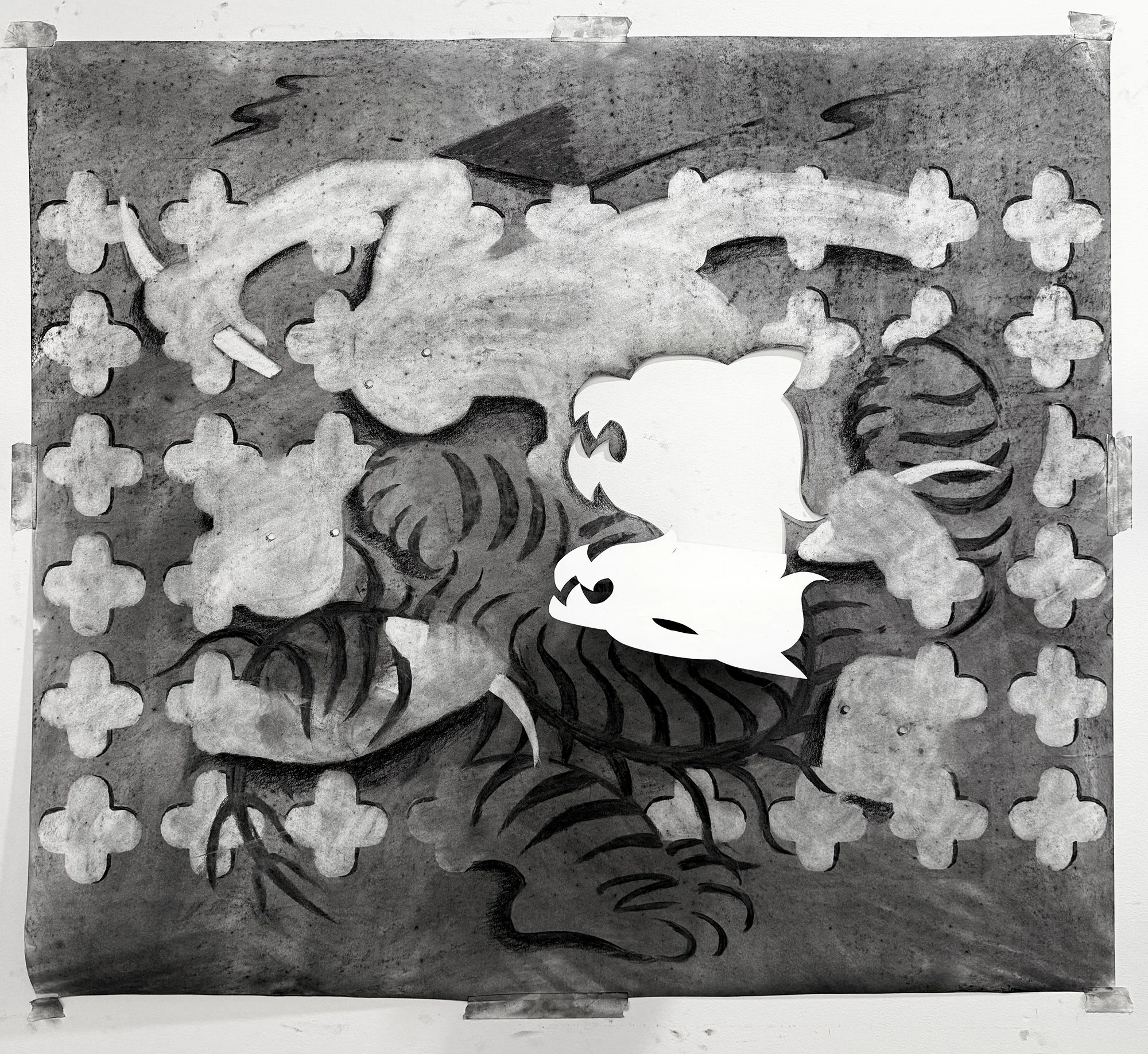
Brett Park, Paper Tiger No.1, 2025, Charcoal on paper, 40.5” x 36”
Against Escapism
Near the end of our conversation, Brett articulates something I've been sensing throughout: a deep ambivalence about art's traditional function as refuge. "I don't maybe in the future want it to be so leisurely when people look at the work or just appreciate the aesthetic form, allow themselves to find escapism in an artwork. I feel like we need less escapism right now."
This isn't puritanism. Brett acknowledges his own escapist pleasures, “scrolling on Instagram reels and literally watching BL Anime”. Rather, it's recognition that in the imperial core, where artists in big galleries aren't "experiencing necessarily the weight of oppression directly," art too easily becomes another amenity for dinner party conversation rather than a tool for confronting reality.
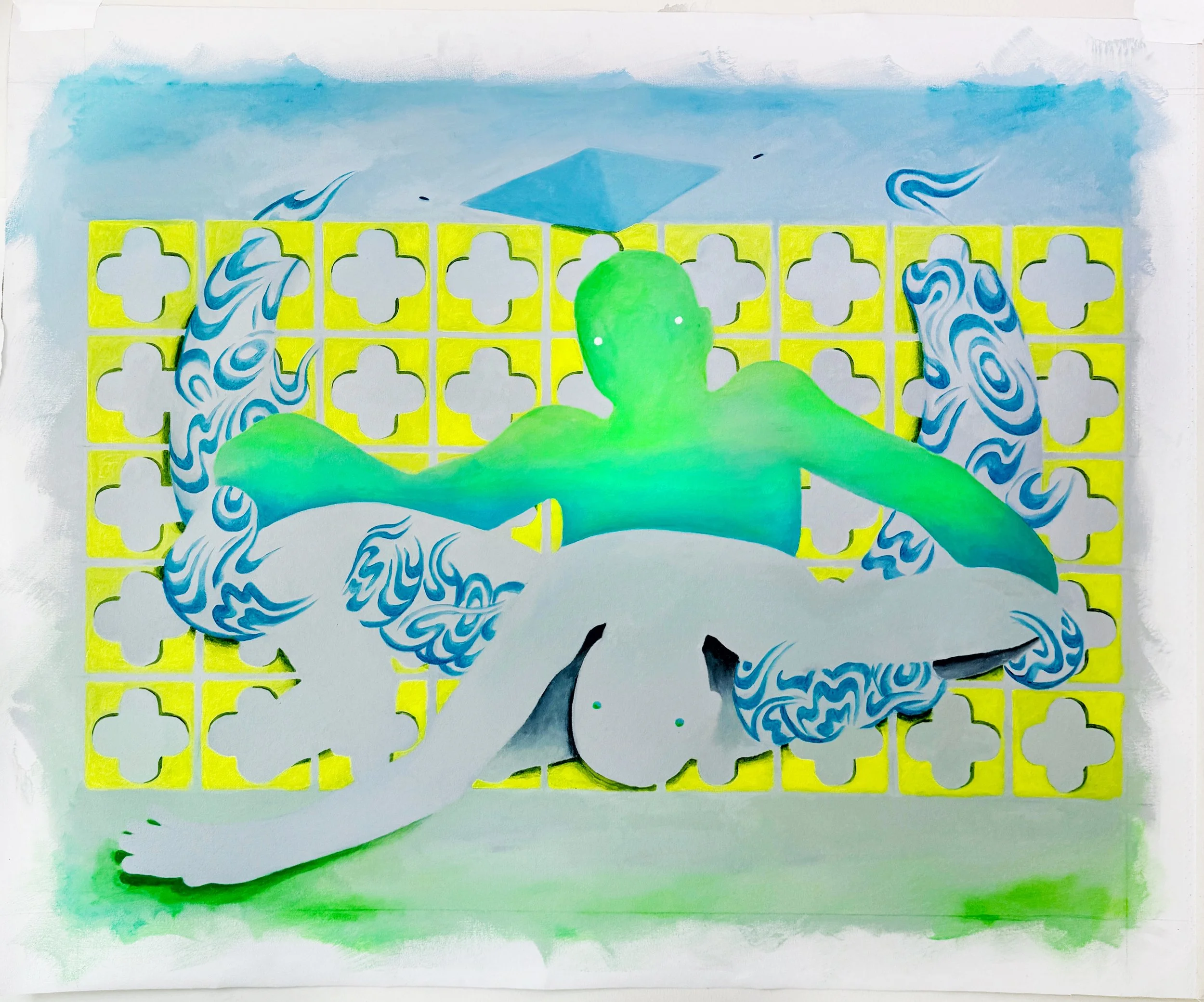
Brett Park, Bait and Switch, 2025, Acrylic on canvas, 40.5” x 36”
The Long Game
What emerges most powerfully from this conversation is Brett's commitment to lifelong political organizing that may or may not produce art. "It's not going to be like a one, two year thing. Like this will be like a lifelong thing," he says. "At the same time, it's like there's an urgency, but there's not a rush."
Brett isn't performing radicalism for the 'gram or making agitprop to advance his career. He's genuinely trying to figure out what an artist committed to revolutionary politics does with their time, their skills, their inevitable complicity in systems they critique. The answer involves ceramics jobs, door-knocking, theoretical reading, and making art as a secondary practice: something that emerges when it emerges, without the pressure to produce for shows or markets.
This repositioning of art-making as ancillary rather than central represents perhaps Brett's most radical gesture. In an art world that demands constant production, professional networking, and strategic career moves, Brett is modeling something else: the artist who might not make it, might not want to, and is okay with that because the work (the real work) is elsewhere.
Brett doesn't offer liberation or escape; he offers the struggle itself, rendered in gestural charcoal marks and precise geometric cuts. The work asks us to sit with contradiction: the hole that is both nothing and everything, the individual who can only be free collectively, the artist who makes art about the limits of art. In refusing to settle on a clear path forward, Brett keeps the question open: what does it mean to be an artist right now, in this moment, with these politics?
The answer, at least for now, involves holes and tigers, charcoal and paper, organizing and ceramics, theory and door-knocking. It involves showing up to do the work (all the work, not just the art) without certainty about where it leads.
Brett Park lives and works in New York. He is currently organizing while maintaining a studio practice focused on drawing, painting, and sculpture.
Clarisse Abelarde is an artist and writer based in Los Angeles. She runs Nous-ance, a platform featuring conversations with artists, critics, and art historians.